Gas Water Heater Repair in Carrollton and DFW
- Licensed Texas plumbers
- Gas and electric, tank and tankless
- Same-day visits when the schedule allows
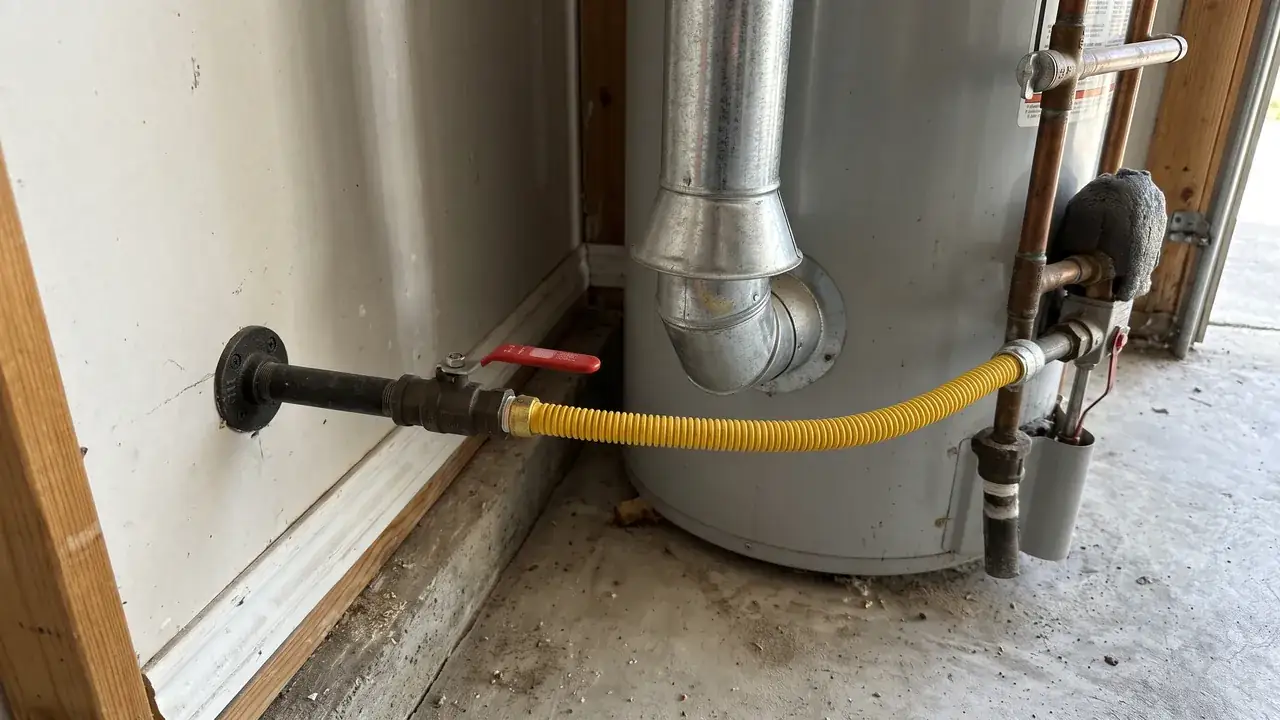
If you smell gas
Leave first. Walk everyone out, including pets, without switching lights, appliances or phones on or off inside. Dial 911 or the Atmos Energy emergency desk once you are clear of the house, from the yard or a neighbor's porch. Do not relight a pilot, start a car in an attached garage or try to find the leak. Re-enter only when the utility or fire department says so. A heater that smells of exhaust or has soot around the draft hood also needs attention before anyone relights it.
Thermocouple, thermopile and the pilot
A standing-pilot heater keeps a small flame lit beside the burner. A thermocouple sits in that flame and produces a few millivolts that hold the gas valve open. When the thermocouple weakens, the valve closes and the pilot goes out. The pilot also fails when the orifice clogs with dust and the flame goes small and yellow, or when a draft blows it out.
Replacement parts are inexpensive and the job is brief, but the gas control valve and the burner assembly must be inspected at the same visit. A thermopile, found on some valves, makes more power than a thermocouple and runs the gas control electronics. Many modern tanks use electronic ignition instead of a standing pilot, with a hot surface igniter and a flame sensor.
Symptoms and likely parts
These pairings show where a technician usually starts. They are not a do-it-yourself list, since gas work carries real risk.
| Symptom | Likely cause | Typical action |
|---|---|---|
| Pilot will not stay lit | Thermocouple, dirty orifice, draft | Replace thermocouple, clean orifice, check vent |
| Pilot lit, burner never starts | Gas valve, thermostat, no gas | Test valve, check supply |
| Burner lights, then shuts down | Flame sensor, weak thermocouple, back-draft | Replace sensor, check flue |
| Yellow, lazy flame, soot | Poor combustion air, dirty burner | Clean, check combustion air |
| Rumbling and popping | Sediment on the tank bottom | Flush, or replace if old |
| Water too hot | Gas control valve stuck on | Replace gas control valve |
| Flue pipe hot to touch near the heater | Blocked or weak draft | Inspect vent connector and chimney |
Gas control valve
The gas control valve combines the thermostat, the safety shutoff and the main gas valve. When it fails, the heater may not light, may not shut off or may overheat the water. Replacement is a common repair on heaters under ten years old, and the part price makes it worth considering against a new tank only when the tank is already aging. A heater with a failed valve and a seven-to-ten-year-old tank deserves a replacement conversation.
Draft, back-draft and carbon monoxide
A gas heater needs exhaust to rise out of the flue. Back-drafting happens when something pulls exhaust back into the room: a leaky or disconnected vent connector, a blocked chimney, a bath fan or a dryer that depressurizes a tight house, or a closet without enough air. Signs include soot at the draft hood, rust on the flue pipe, a flame that rolls out or flutters, and a smell of exhaust.
Carbon monoxide is odorless, so a working CO alarm outside the sleeping area is the only reliable warning. If it sounds, go outside, call 911 and do not return until the home has been cleared. A technician can test draft with a mirror or a smoke test and measure CO in the flue gases.
Combustion air in DFW closets and garages
A gas tank heater uses a lot of air. In a closet it needs openings for combustion air, usually a high and a low vent sized to the BTU rating, or ducts to the attic or outside. Tight 1990s and 2000s construction often closes a closet with a solid door and no louvers, starving the burner.
Garage units draw air from the garage, which can carry fumes and dust; the FVIR design and an 18-inch platform exist for this reason. Lint from a nearby dryer or from a workshop can clog the burner screen and flame arrestor. Direct vent models avoid most of these problems because they draw outside air through a sealed pipe.
Venting problems
Atmospheric vents rise at a quarter-inch per foot at least, with no downward runs and tight, screwed joints. Many attic heaters have vent pipes that have sagged or separated with age, and bird nests can block roof caps. Power vent models depend on a fan, pressure switch and PVC pipe that can clog or crack. A vent fault trips a safety switch on many models, which stops the burner rather than let exhaust spill.
Repair or replace
A thermocouple or igniter on a ten-year-old heater is usually worth fixing. A gas valve plus sediment and a tank at twelve years is closer to a replacement. If a tank is rusting at the base or the flue shows heavy corrosion, move to replacement rather than repair. The thresholds are on repair cost.
Questions people ask
What does a thermocouple do on a gas water heater?
It senses the pilot flame and generates a small voltage that holds the gas valve open. When it weakens or the flame is too small, the valve closes and the pilot goes out. Replacement is a common, relatively low-cost repair.
Why does my pilot light keep going out?
The usual causes are a failing thermocouple, a dirty pilot orifice, a draft from the vent or closet door, or a gas control valve that is not holding. If it goes out repeatedly, have the unit inspected rather than relighting it again and again.
What should I do about a gas smell around my water heater?
Get everyone outside right away without flipping switches or using devices indoors. Once clear of the house, dial 911 or reach the gas utility's emergency desk. Never try to relight the pilot or hunt for the leak yourself; wait for responders to declare the house safe.
How much does gas water heater repair cost?
Typical DFW repairs run about $150 to $650, with thermocouples and igniters at the lower end and gas control valves at the higher end. These are typical ranges, not quotes, and labor depends on attic or garage access.
Can a gas water heater cause carbon monoxide poisoning?
Yes, if it back-drafts, burns poorly or vents into the living space. A CO alarm near bedrooms, regular vent checks and prompt repair of soot, rust or flame rollout lower the risk.
Why is my gas water heater making a popping or rumbling noise?
Water trapped under sediment boils and pops. DFW hard water leaves scale faster than softer supplies. Flushing can help a younger tank; an older, heavily scaled tank may be near the end of its life.
Do gas water heaters need a vent permit or inspection?
Most DFW cities require a permit for a replacement or a vent change, and an inspector checks the gas joints and the vent. A licensed plumber normally handles the permit. Combustion air and clearances are part of the inspection.
Ready when your heater isn't.
One call covers every ZIP on this site.