Water Heater Repair in Dallas, TX
- Licensed Texas plumbers
- Gas and electric, tank and tankless
- Same-day visits when the schedule allows
Local snapshot
- Water
- Dallas Water Utilities (surface water from Lakes Ray Roberts, Lewisville, Grapevine, Ray Hubbard, Tawakoni, Fork and the Elm Fork; East Side, Elm Fork and Bachman plants)
- Hardness
- Not published in DWU's 2024 report; commonly cited around 7 grains per gallon (hard)
- Gas
- Atmos Energy
- Electric
- Oncor (delivery)
- Permits
- City of Dallas Sustainable Development and Construction, DallasNow portal; in-person stations at 320 E. Jefferson Blvd.
- From Carrollton
- about 15–35 minutes via the Dallas North Tollway, I-35E or I-635, depending on district
One city, five different water heater problems
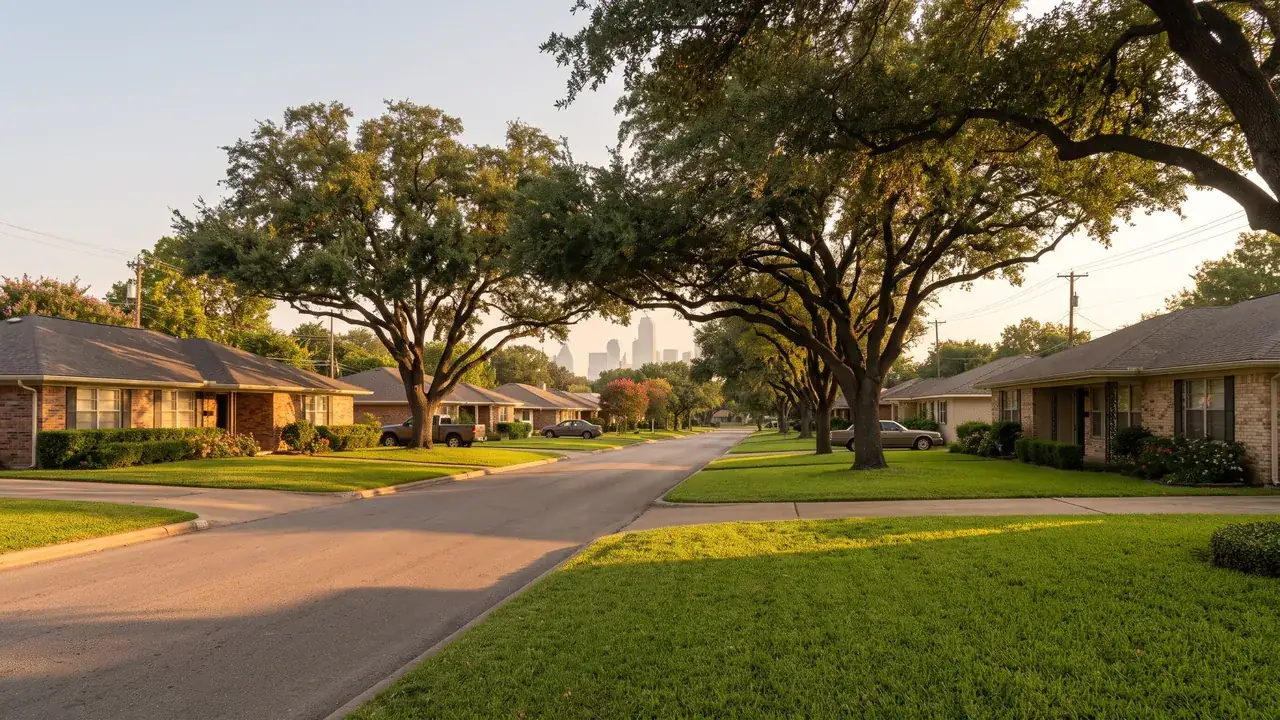
Dallas covers roughly 385 square miles, and a heater in a 1925 Oak Cliff bungalow has almost nothing in common with one in an Uptown tower or a 1990s two-story near Preston Road and Frankford. The city's water comes from one system, but the homes it flows into were built across a century, on pier-and-beam, slab, and concrete decks, with heaters in crawlspace closets, attic platforms, garages, and mechanical rooms on the 14th floor.
That spread is why a repair visit in Dallas starts with the building, not the heater. Before anyone quotes a part, the plumber needs to know the foundation, where the tank sits, whether the gas line is black iron from the 1950s or flexible connector, and whether the house has an expansion tank. The district guides below break the city into eight areas with those details for every ZIP.
What comes out of a Dallas tap
Dallas Water Utilities treats surface water only. Its 2024 water quality report lists seven sources, including the Elm Fork of the Trinity River and Lakes Ray Roberts, Lewisville, Grapevine, Ray Hubbard, Tawakoni and Fork, and it reports a 2024 average total chlorine residual of 2.97 ppm in the distribution system. DWU's fact sheet counts three treatment plants (East Side, Elm Fork and Bachman) serving about 1.2 million Dallas residents plus wholesale customers in 27 nearby communities.
The report does not publish a hardness number, but water-treatment sources commonly put Dallas tap water around 7 grains per gallon, which is in the hard range. That is enough to coat a heating element in a few years and to leave a layer of scale on the bottom of a gas tank. A hard-water guide for DFW heaters covers flushing intervals and anode rod choices in more detail.
Atmos Energy, Oncor, and what each means for your heater
Gas service across Dallas comes from Atmos Energy, which is headquartered in the city, and electricity is delivered by Oncor, with the retail plan chosen separately by the customer. The split decides which repair path you are on: thermocouple, gas control valve and burner problems belong to gas heaters, while upper and lower elements and thermostats belong to electric ones.
Older neighbourhoods inside the Park Cities fringe and Oak Cliff lean gas, because the mains went in decades ago. Newer mid-rise and condo buildings, especially downtown and in Victory Park, often use electric or central boilers, and apartment complexes off Greenville and Skillman frequently use individual electric tanks in a utility closet. A gas water heater repair visit and an electric one involve entirely different parts lists.
Housing stock from the 1920s to the 2020s
The oldest heaters in the city sit in Oak Cliff and East Dallas bungalows from the 1910s through the 1940s, where the tank may be in a hall closet, a kitchen alcove, or a crawlspace reached through an exterior hatch. Mid-century ranches in Preston Hollow, Lake Highlands and Pleasant Grove usually have a garage or closet install with a flue through the roof.
Houses from the late 1970s into the 1990s across Far North Dallas, Prestonwood and parts of Lake Highlands often have attic heaters over the second floor, which makes a leak a ceiling problem within hours. Townhomes in Uptown and Oak Lawn tend to put the tank in a tight closet or attic space, and the high-rises use central systems or floor-by-floor units that are governed by the building.
| Building type | Typical location | What it changes |
|---|---|---|
| 1920s–1940s bungalow (Oak Cliff, East Dallas) | Closet, kitchen alcove or crawlspace | Old venting and gas lines often need updating at replacement |
| 1950s–1960s ranch (Preston Hollow, Pleasant Grove) | Garage or utility closet | Flue is usually through the roof; vehicle-impact protection applies in garages |
| 1980s–1990s two-story (Far North Dallas) | Attic over the second floor | Pan and drain line matter; a leak damages ceilings |
| Uptown and Oak Lawn townhome or condo | Closet or attic | Building rules and shut-off access come first |
| Apartment or mid-rise | Unit closet or central plant | Often a building decision, not a tenant one |
The freezes that changed how Dallas maintains heaters
February 2021 left Dallas without power for days, and water heaters froze or cracked in garages and attics across the city. Burst heater lines and failed gas valves followed the thaw. A hard freeze in late January 2026 produced a similar, smaller wave: Dallas Water Utilities answered more than 350 cold-weather calls in the first days, 207 of them burst pipes, and local plumbers reported leaking and burst heaters, tankless units included.
The practical lesson for Dallas homes is to insulate exposed hot and cold lines in garages and attics, keep drip-open faucets on exterior walls running through the whole freeze, and know where the water shut-off is before the temperature drops. If a heater has been through a freeze, check the base and the connections for slow weeping after the thaw; a leaking water heater should have its water supply shut off at the cold-inlet valve.
Permits and inspection in the City of Dallas
The City of Dallas states that a permit is required for water heater replacement. Licensed plumbing contractors must be registered with the city, and a homeowner with a homestead exemption who lives in the home may pull the permit for their own work. The city's plumbing guidance lists a minimum permit fee of $100, though fees can change, so confirm the current schedule with the city.
Applications now run through DallasNow, the city's online land management portal, and the building inspection offices at 320 E. Jefferson Boulevard in Oak Cliff still provide in-person self-serve stations. Licensed Texas plumbers handle that step as part of a replacement. For the state-level rules behind it, see the state plumbing code and permit guide.
Where to read next
Each district page below gives ZIP-by-ZIP notes on housing eras, heater locations and local water scale. For service detail that applies citywide, the replacement cost breakdown and the page on tankless installation cover pricing and the gas-line upgrades that older Dallas homes often need.
Questions people ask
Does Dallas require a permit to replace a water heater?
Yes. The City of Dallas states a permit is required for water heater replacement. Registered, licensed plumbing contractors handle the permit, and a homeowner who lives in the home with a homestead exemption may pull their own. Applications run through the DallasNow portal.
What should a tank replacement cost in Dallas?
A standard 40- or 50-gallon gas or electric tank typically runs about $1,400–$2,600 installed in Dallas in 2026, depending on brand, venting, code upgrades and access. Attic installs and tight Uptown closets sit toward the high end. These are typical ranges, not quotes.
What does a typical Dallas water heater repair cost?
Most Dallas repairs land between about $150 and $600. Thermostats, elements and thermocouples are the cheap end of the scale, with gas control valves and tankless parts higher. If the tank itself is leaking, replacement is the only fix.
Is Dallas water hard enough to damage a heater?
Dallas Water Utilities does not publish a hardness figure in its report, but commonly cited values are around 7 grains per gallon, which is hard. Scale builds on elements and tank bottoms, so a yearly flush and a check of the anode rod extend the life of a tank in most Dallas homes.
What causes no hot water right after a freeze?
After a freeze the cause is often a tripped breaker or a pilot that went out, but a cracked fitting or frozen supply line is also common. Check the area around the heater for water before resetting anything, and shut off the cold-inlet valve if you see a leak.
Do Dallas high-rises and condos use the same heaters as houses?
Often not. Many Uptown and downtown towers use a central boiler or a shared system run by the building, while townhomes and older condos use individual tanks in closets or attics. Whether you can replace a unit yourself depends on the association's rules.
Ready when your heater isn't.
One call covers every ZIP on this site.